REQUEST A QUOTE
"*" indicates required fields
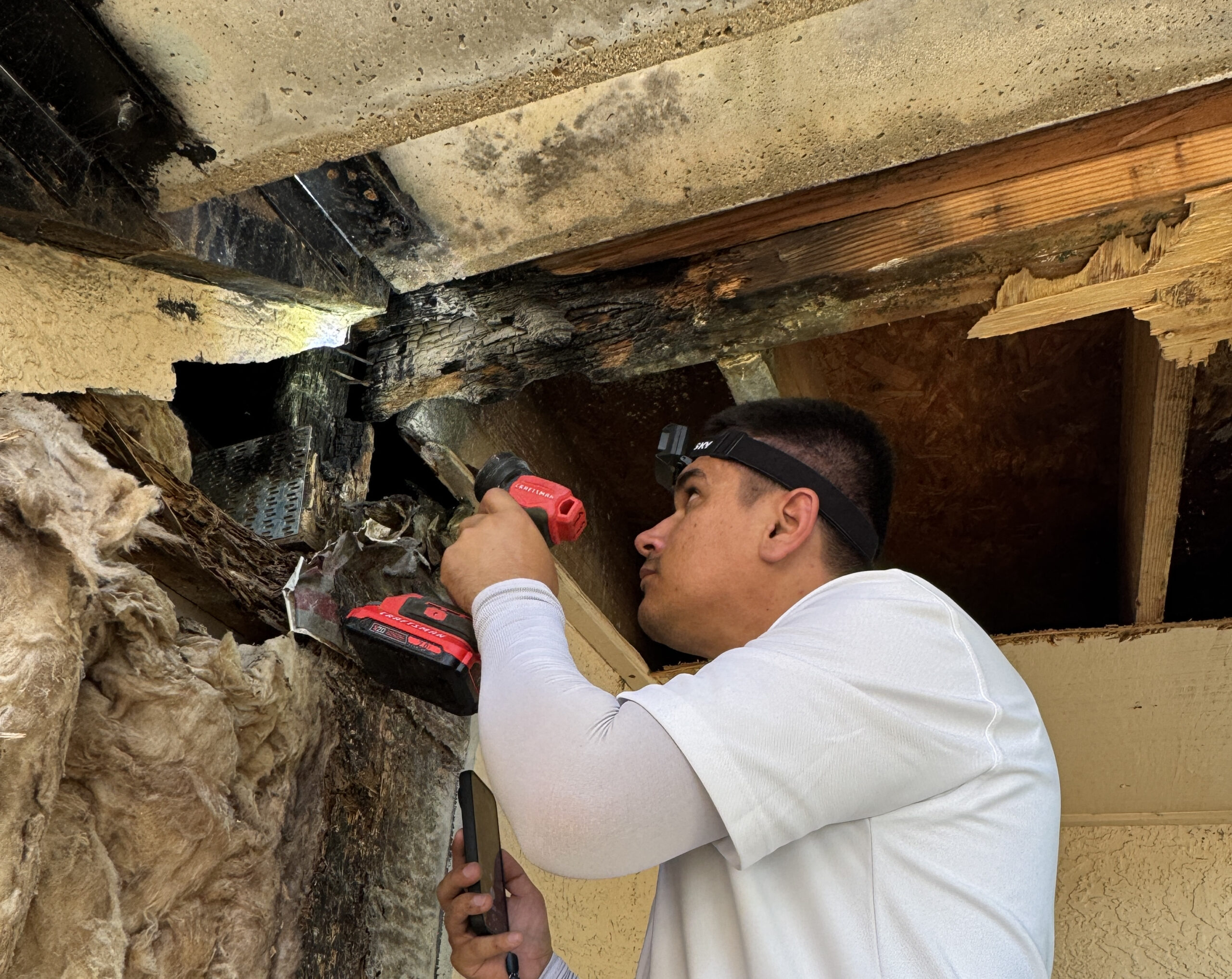
One of the biggest mistakes owners make when dealing with water intrusion is assuming the visible leak is the actual problem.
Most of the time, it isn’t.
The water stain on the ceiling, the damaged drywall, the rusted metal, or the bubbling paint are usually just symptoms. The real issue often started somewhere else entirely. In some cases, the entry point may be dozens of feet away from where the damage eventually becomes visible.
That is what makes water intrusion one of the most misunderstood building failures.
Water behaves differently than most structural or construction-related issues. It moves slowly, follows gravity, pressure differences, construction joints, penetrations, and assembly transitions. By the time visible damage appears, water has often been working through the building envelope for months—or even years.
Finding water is easy.
Finding where it entered is the difficult part.
Owners often ask, “Where is the leak?” when the more important question is, “Where did the water get in?” Those are rarely the same location.
Water may enter through:
The visible damage is often just the end of the journey.
"*" indicates required fields