REQUEST A QUOTE
"*" indicates required fields
Check all doors and windows to confirm they open, close, and lock properly. Gaps or drafts may suggest the need for sealing or weatherstripping. Doorframes and window sills should be examined for water damage or wood deterioration, especially in kitchens and bathrooms, where moisture exposure is more common.
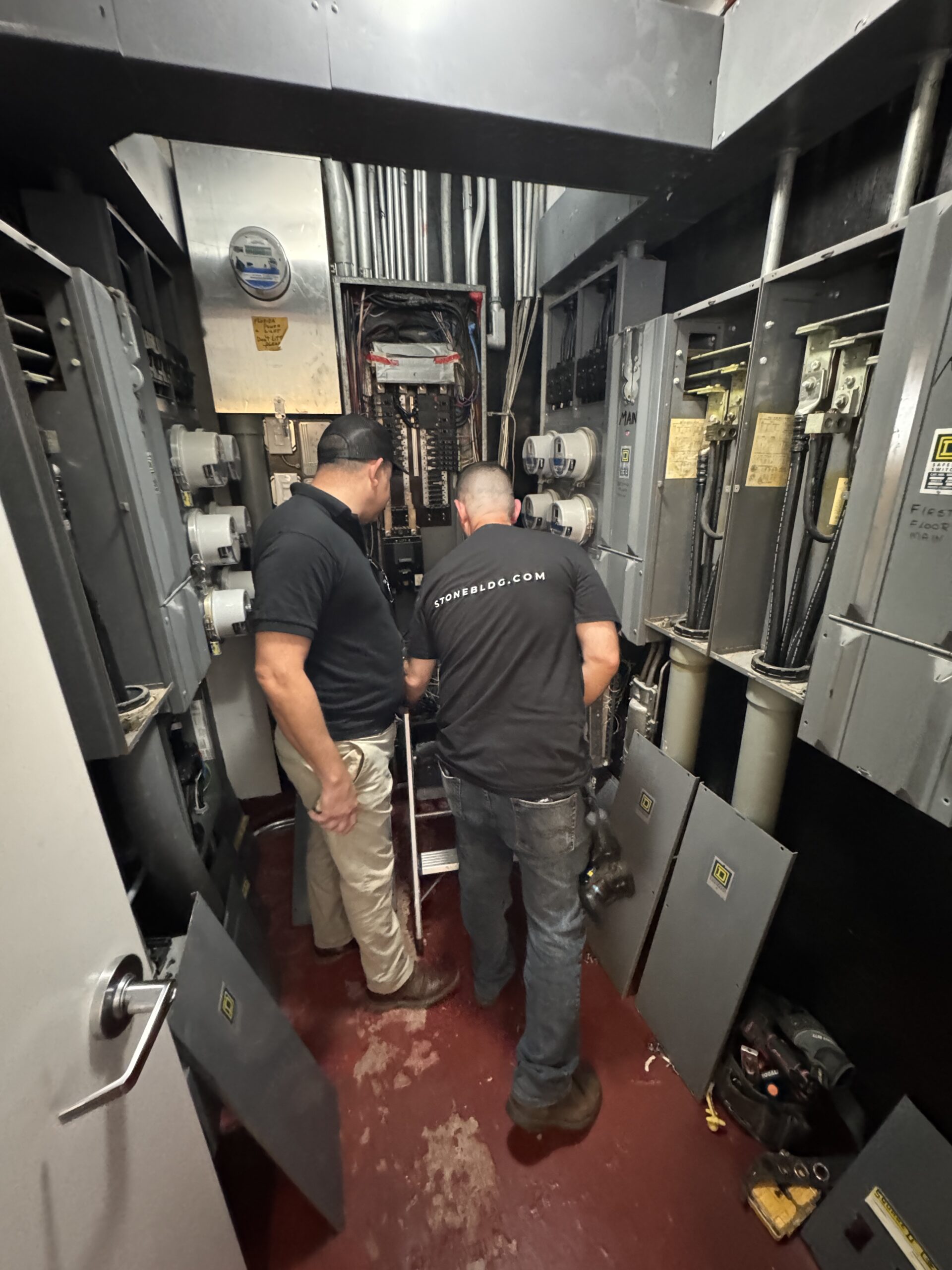
During an interior inspection, test light switches and outlets for proper operation. Look for exposed wiring or signs of overheating. Electrical panels should remain accessible, clearly labeled, and consistent with current standards.
Smoke detectors and carbon monoxide detectors in each area should be tested regularly. Emergency lighting in hallways and stairwells should also be checked to confirm functionality during power interruptions.
Plumbing systems require close attention. Faucets in kitchens, bathrooms, and laundry areas should be checked for leaks or wear. Running water helps confirm adequate flow and proper drainage without backups. Toilets should flush correctly, and the base should remain dry with no signs of leakage.
An interior inspection should always include an evaluation of fire safety systems. Check the fire extinguishers to ensure they are fully charged and accessible. Examine sprinkler systems (if applicable) to make sure all sprinkler heads are unobstructed and working.
Kitchen appliances such as ovens, refrigerators, microwaves, and dishwashers should be checked for normal operation. Cabinets should be inspected for loose hardware or moisture damage. Countertops should remain intact without cracks or staining. Bathroom fixtures should also be reviewed for stability, leaks, and overall condition.
Heating and cooling systems should operate efficiently. Air filters need regular replacement, and vents should remain clear of dust and debris. Heating and cooling functions should be tested to confirm reliable performance. Poor HVAC operation can affect comfort and indoor air quality over time.
Finish by checking for pest activity. Droppings, nests, or unusual odors may indicate a problem. Areas such as basements, attics, and spaces behind appliances deserve close attention. Early detection helps limit damage and reduces the scope of corrective work.
At Stone Building Solutions, we specialize in overseeing the construction and maintenance of buildings, so everything is in top condition throughout the building’s lifespan.
We help property owners stay ahead of potential issues by conducting thorough inspections and advising on necessary repairs or upgrades. Regular interior inspections are a key part of this process, helping maintain the safety and value of your property.
If you are ready to carry out an interior inspection on your property, we are here to help. Our team at Stone Building Solutions offers detailed assessments to make sure your property is in excellent condition and in compliance with local building codes.
Contact us today to schedule an appointment and keep your property safe, functional, and well-maintained.
"*" indicates required fields